
Eldridge Warrant Checks
Eldridge has no single official warrant portal. Instead, a warrant check pulls from several sources that answer different questions. The Scott County Sheriff posts a limited display of possibly active warrants held by county law enforcement. Iowa Courts Online can surface public state case or citation context. The Scott County Clerk holds the court file itself. For a police report, citation, or any other city-held record, Eldridge Police is the agency to contact.
- Search the Scott County Sheriff warrant pages by name or available warrant details.
- Record the page's date and read its active-data limits before drawing a conclusion.
- Use Iowa Courts Online by full name or exact case or citation number, selecting Scott County.
- Ask the Scott County Clerk to verify a public docket, hearing status, or court order.
- Contact Eldridge Police for agency-specific reports and citations.
- For a confirmed warrant in your name, consult an attorney and obtain official appearance, surrender, and bond instructions.
A blank result does not prove no warrant exists. Eldridge process that is new, sealed, confidential, juvenile, or federal may simply not appear in any one source.
Policing and Courts in Eldridge
Eldridge Police handles local police work and keeps the agency records it creates. Its official page lists 305 N. 3rd Street, Eldridge, Iowa 52748, and 563-285-3916. The city contact page separately lists 563-285-9822 as a police non-emergency number. A judge or magistrate issues a warrant, not a police website. The Scott County Clerk maintains the state court file.
Eldridge Police Department
305 N. 3rd Street
Eldridge, IA 52748
563-285-3916
Use the department for an Eldridge report, citation, or agency record.
Scott County court route
Use Iowa Courts Online and the Clerk for a public state case, citation, hearing, or current court order.
The official Eldridge Police page provides the department contact and communications description.
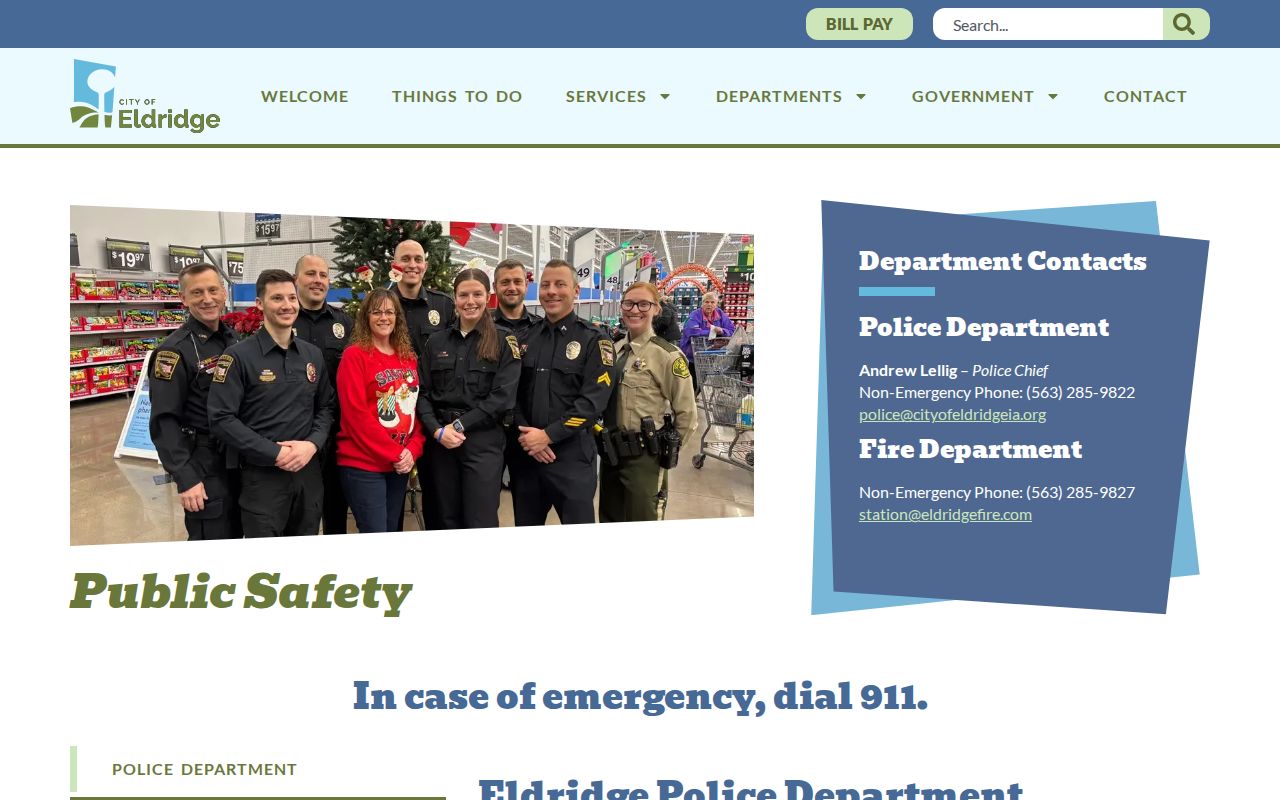
The agency page can route a police-record question, but it cannot verify every Eldridge warrant.
Two Eldridge Warrant Contact Lines
Eldridge offers two official numbers: the department phone and a non-emergency line. The labels matter. A routine record question may fit the department route, while the non-emergency number handles other non-urgent police contact. Neither line replaces the Clerk when the question is a judge's order, a court date, or a docket entry.
| Official route | Best use | Limit |
|---|---|---|
| Police department | Eldridge report, citation, or agency record | Not a complete court-record search |
| Police non-emergency | Routine police contact | Not emergency service or a court clerk |
| Scott County Clerk | Public state case and court order | Does not give legal advice |
| Sheriff warrant display | Limited county public snapshot | Not complete or self-authenticating |
For an emergency, call emergency services. A personal warrant concern goes through the Eldridge court and authorized law enforcement, not a phone label alone.
Warrants in Eldridge: The Main Types
An Eldridge case can begin with a police report, criminal complaint, citation, or city ordinance issue. Not every record carries the same force. Iowa law lets a magistrate issue an arrest warrant when a complaint and supporting affidavits show probable cause. A missed court duty may bring bench process. A willful failure to appear on a citation can prompt an arrest warrant under the statutory procedure.
| Record type | Starting point | Primary confirmation |
|---|---|---|
| Arrest warrant | Probable-cause review of a complaint and affidavits | Issuing court or authorized law enforcement |
| Bench warrant | A missed appearance or unmet court obligation | Current docket and Clerk |
| Failure-to-appear warrant | Willful failure to appear on a citation | Citation record and court |
| Municipal infraction | A civil city ordinance citation | Issuing agency and district court clerk |
A summons or citation is not automatically an Eldridge warrant. The current order and docket language control.
Eldridge Forms Are Not Warrant Searches
The Eldridge contact page offers a general form with a category, first and last name, address, email, phone, a brief description, a file upload, a CAPTCHA, and a submit control. Those fields route a city message. They do not make the form a formal public-record request. They also do not search any warrant database. The official Eldridge contact page shows the municipal contact form itself.
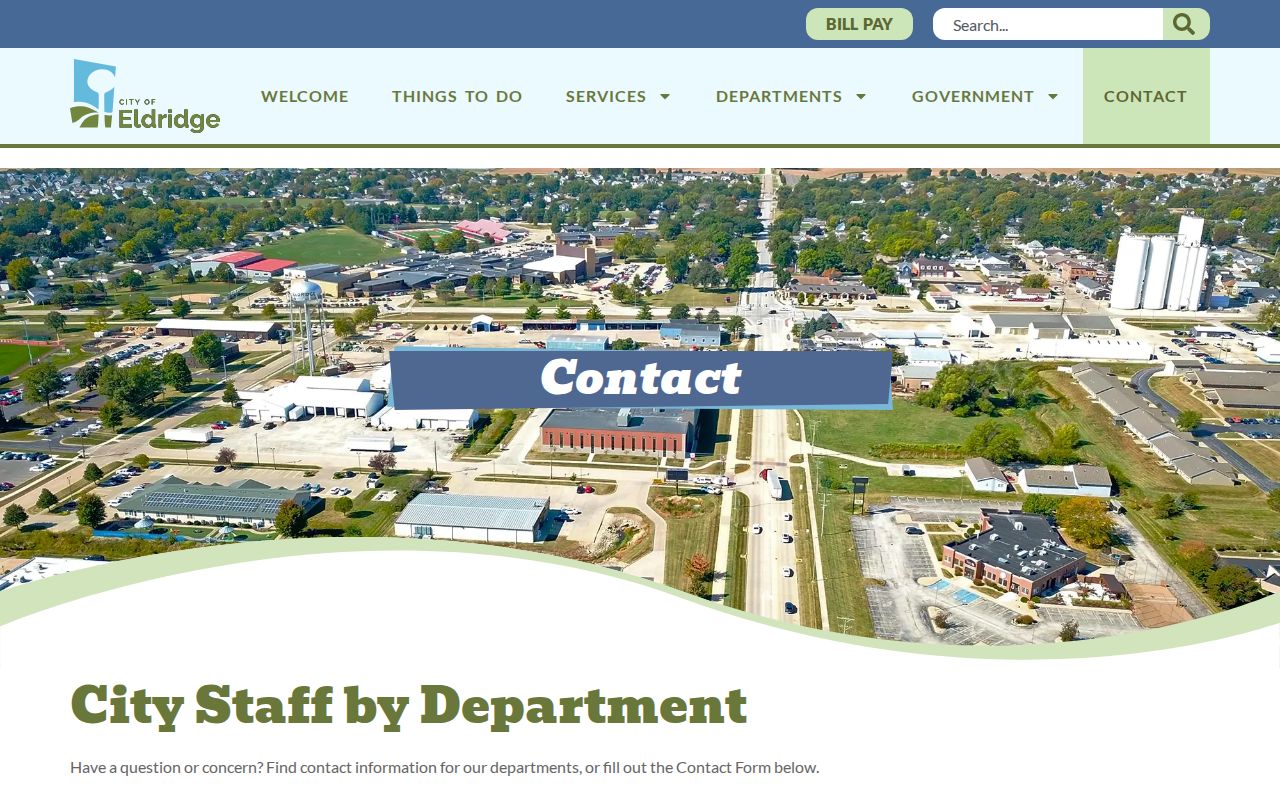
If you contact the city, keep the description narrow. A court-status question goes to Iowa Courts Online or the Scott County Clerk instead.
Eldridge Warrant Records: What They Show
The Sheriff's public result view can show a limited set of fields tied to a possibly active record. It is not the full Eldridge police file or the court docket. Read the issue date, status, charge description, and bond in context, then use the warrant identifier to seek confirmation. Similar names alone do not settle identity.
| Warrant number | An agency identifier such as WARRANT ID for locating the displayed record. |
|---|---|
| Subject name | A search lead that needs identity checks and official confirmation. |
| Charge or statute | A brief public label, not the full complaint or a judgment of guilt. |
| Warrant date | The issue date, distinct from the date of a status change. |
| Bond | A displayed amount that may change under the current court order. |
| Status | An active, served, disposed, update, or custody indicator that must be verified. |
The active view covers warrants from 18 months to 7 days ago. It also lists certain served or disposed records from the prior 30 days. Very new or older Eldridge process can fall outside that window.
Make Eldridge Warrant Requests Specific
A precise request helps the office locate the right record without pulling a broad batch of personal data. Say whether you need an Eldridge Police report, a citation, an administrative agency record, or a Scott County court case. Add a date range and any known report, case, or citation number. Do not ask the city to certify a court status it does not maintain.
- Name the city department or county office that likely holds the record.
- Describe the record type rather than requesting every file about a person.
- Give a narrow date range and exact identifier when known.
- Ask which custodian holds the item if the first office does not.
- Use the Clerk for the official court file and current court status.
Scott County's public-record route may cover county-held materials. An Eldridge agency record stays a city question, while state judicial records follow Iowa court access.
Eldridge Warrants and Scott County
Eldridge Police can open a case, write a citation, and serve valid process within its authority. The warrant itself comes from elsewhere. A judge or magistrate of the Iowa District Court for Scott County issues it, the Clerk keeps the file, and the Sheriff or another authorized peace officer may serve it. Iowa Courts Online adds public case context. It is not a warrant-verification service, though. For the county-wide workflow, see the Scott County warrant records overview.
Warrant flow: Eldridge Police › Iowa District Court for Scott County › Scott County Clerk › Scott County Sheriff and other authorized peace officers
Eldridge Warrants and City Citations
Two city routes carry different labels. In Eldridge, a criminal citation directs a person to appear under state procedure. A municipal infraction is not that. It is a civil city ordinance case under Iowa Code §364.22, where an authorized officer issues the citation and sends the original to the district court clerk. That is why Eldridge needs no stand-alone municipal court warrant database.
- Citation
- A written notice directing a person to answer a charge or appear.
- Municipal infraction
- A civil city ordinance case processed through the district court clerk.
- Bench warrant
- Court process often tied to a missed appearance or unmet judicial order.
- Capias
- A custody-directed court process whose exact effect depends on the current order.
Read the exact words on the Eldridge paperwork and the state docket. A citation, a capias, and a bench warrant do not all mean the same thing.
Accessing Eldridge Warrant Records
Iowa public-record law opens many government records. It also allows withholding or redaction. The office holding the record sets the route. Eldridge Police handles its own agency files, Scott County handles county records, and the Iowa Judicial Branch and Clerk handle state court records. Confidential, sealed, and juvenile material may be absent even in Eldridge files. Fees can cover reasonable search, review, and copying work.
Key rules:
Iowa Code chapter 22 governs access to public records, reasonable fees, and confidential categories.
Iowa Code §§804.1 through 804.4 address arrest-warrant issuance, contents, bond endorsement, and execution.
Iowa Code §232.147 generally protects juvenile records subject to stated exceptions.
Public access does not make an old capture a current legal answer. Check the live record with the Eldridge office that maintains it.
Resolve Eldridge Warrants Safely
If officials confirm an Eldridge warrant in your name, ask an attorney about the case and the safest next step. The Scott County Sheriff FAQ describes a voluntary-surrender route. You go through the Clerk's Office during a stated weekday morning window, where the clerk pulls the case and a bailiff and judge handle the next steps. The judge may release or remand the person. Release is never guaranteed. Before paying, ask the court for the current order and the bond terms. Paying a fine online is not clearing an arrest warrant. It can carry legal consequences. An Eldridge police non-emergency call or a city web form is not a court appearance either. Verify urgent payment claims through independently reached government pages. Never treat a caller's link or threat as proof that an Eldridge warrant exists.
Eldridge Warrant Scale Needs Care
Eldridge counted 6,726 residents in the 2020 Census. That ranks it third among Scott County's top five incorporated places. The number is city context only. It is not a count or a rate of Eldridge warrants. A smaller population changes nothing about Iowa warrant law. It does not reduce the need for court confirmation or make the Eldridge police page a complete index.
The Sheriff's display combines data from agencies across Scott County and changes over time. Do not use it to estimate Eldridge warrant activity.